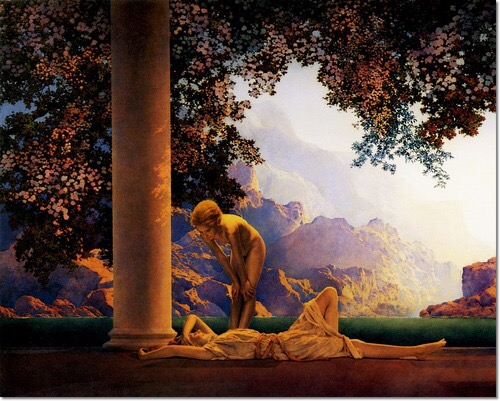
“Enchantment: Remembering Back into Maxfield Parrish”
On a rainy January afternoon, I had nothing but a mind-numbing vista of meetings spread out over my afternoon. The day was gray; I was blue. I decided that in the hour I had available that I would drive up to Skinner’s Butte, one of Eugene, Oregon’s few local high-ish places. The view from there is down Willamette Street through Eugene, across the valley floor to Spencer’s Butte.
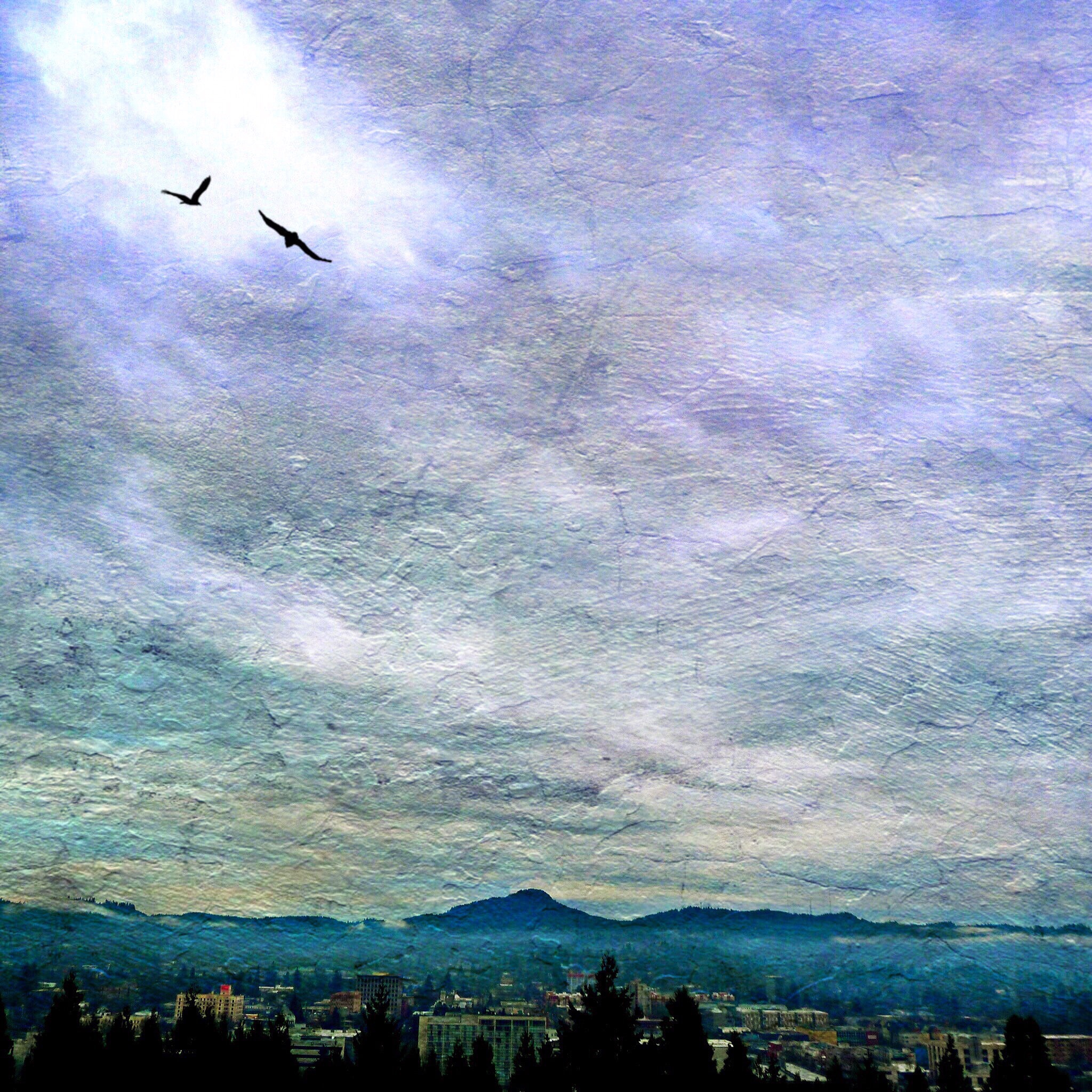
I took a variety of photographs using my Panasonic Lumix 5 because the act of looking through the lens gathers my scattered thoughts, brings me back to center, anchors me in the present moment where I belong.
The little park on top of the Butte was built in 1914. I don’t know when the cement viewing platform was built, but it features two large, elegant, ball – topped cement pillars about four feet tall. I placed one on the left side of the camera frame with Spencer’s Butte in the background.
That evening, as a reward for having survived the meetings, I played with the few images I had taken, moving them in and out of photo apps on my iPad. As I played with the pillar and mountain image in an app called Distressed FX, I found a combination of golden glow and deep blue that I found suddenly very compelling.
I paused and ask myself why, and I realized I was forcibly reminded of the Maxfield Parrish paintings in my childhood edition of Arabian Nights. That memory took me to such a deep, beginning place as a child. I used pour over each richly colored plates, wondering especially about what I would now call architectural details – giant urns that a child could – and did in one of Scheherazade’s stories – hide in; open-air colonnades with huge pillars framing a wilderness scene of craggy mountains and free tumbling waterfalls.
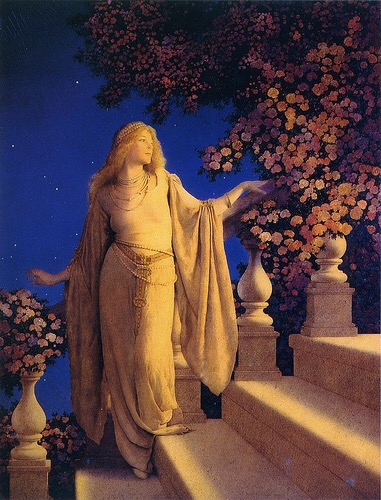
I loved this painting as a child; so much so that five decades later somehow I remembered the ball-topped pillar in the upper right on the staircase. When I photographed a similar pillar in indigo and gold (photograph, below), my soul flowered with pleasure.
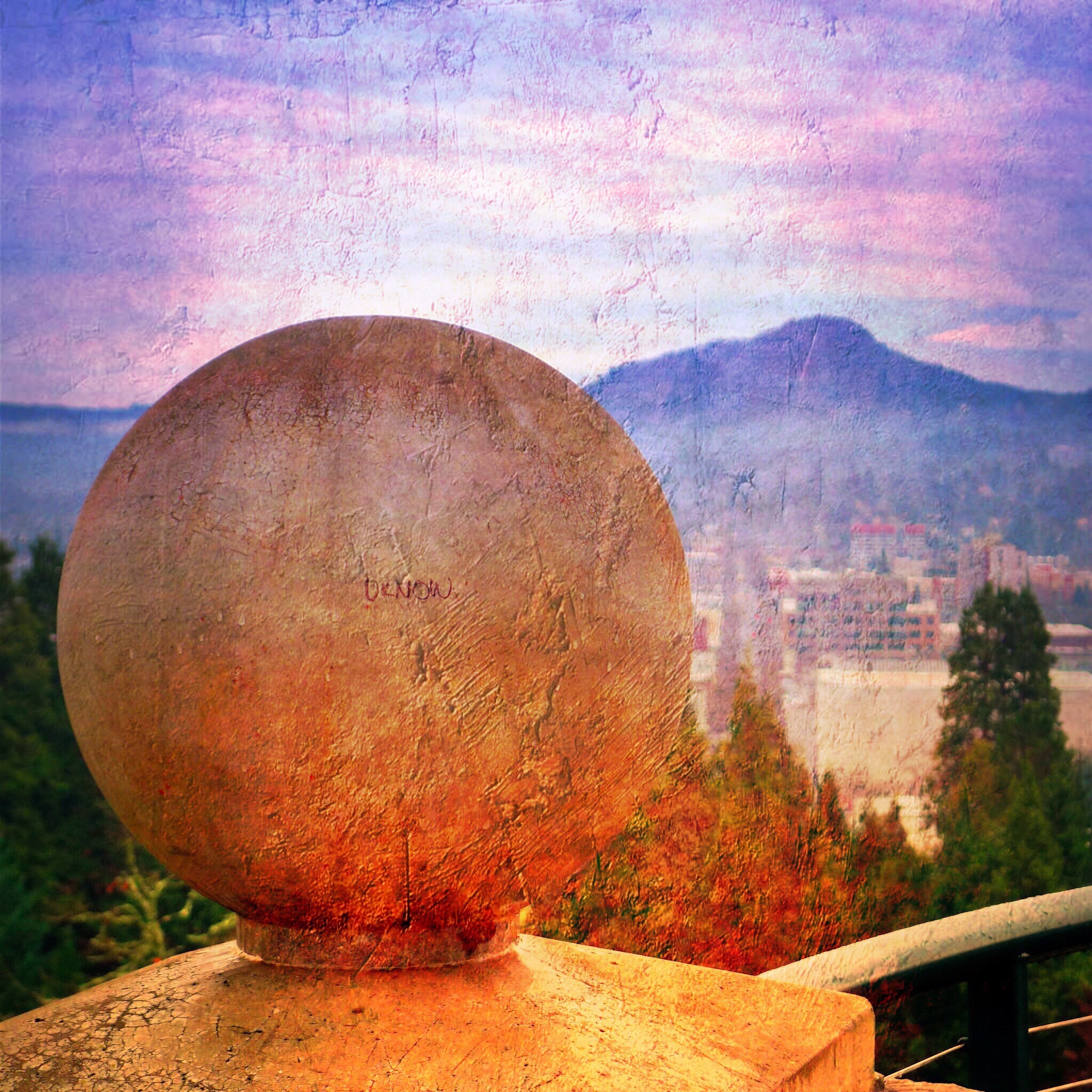
This is what I call Source Imagery, a personal lexicon of signs, symbols, memories, dreams, reflections that bubble like spring water underground only to emerge in surprising and soul-nurturing ways.
As a child of the Pacific Northwest, I understood the wilderness scenes, but I went back again and again to wonder about how broad stairs, shrines, gazebos, fountains and urns got out there in the mountains. The figures, which I now see as romanticized, were just other children to me, children from the Arabian Nights stories that informed the images.
Maxfield Parrish is famous for his rich blues – a certain shade was even named after him, “Parrish blue.” His contrasting color was gold, and in between he painted with a saturated palette of violets, deep indigo, and gold, gold, and more gold. I understood this palette, too, as not romantic, but as a reflection of the mountainous, sun-drenched world I knew.
My most passionate images spring from the source waters of my childhood. A spring moves underground among gravel bars and root complexes gathering minerals and scents so subtle and wild that the human nose can’t detect them.
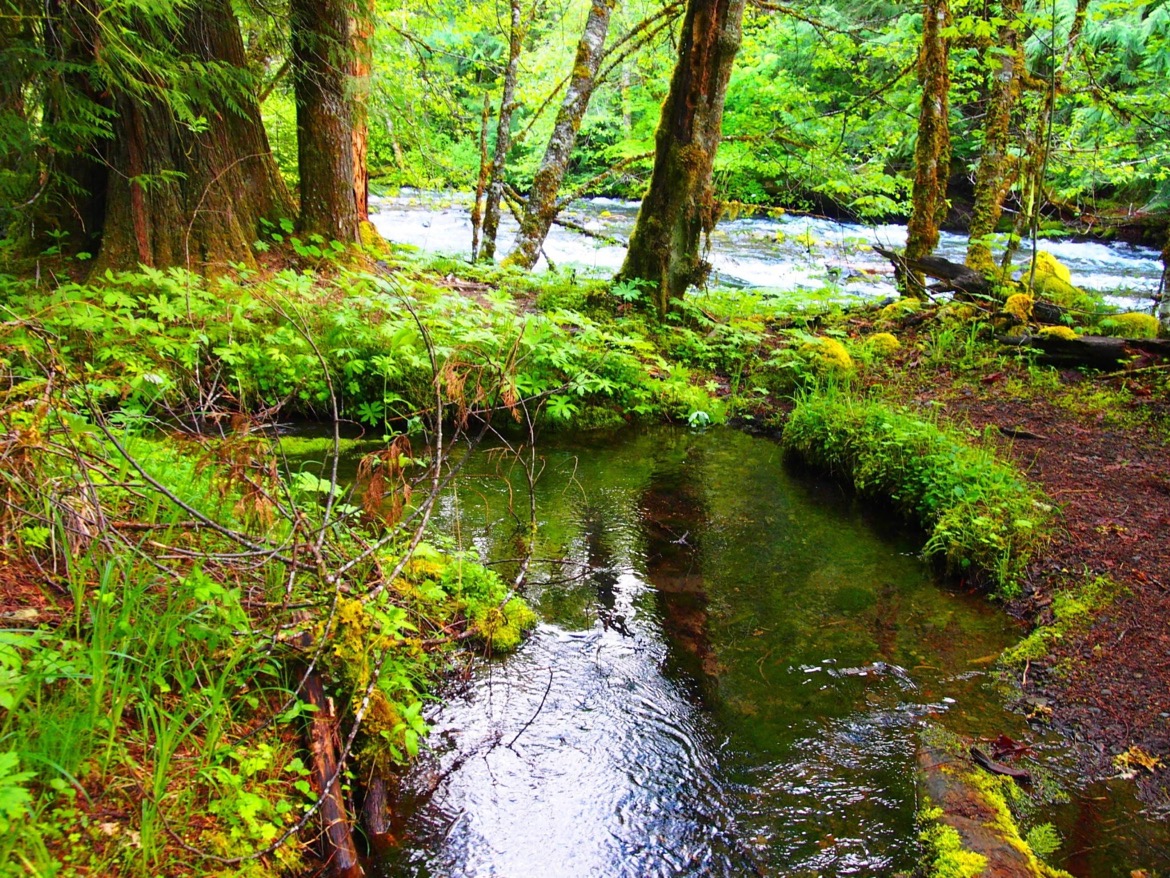
At unexpected folds of the landscape, the springs emerge such as those at Indigo Springs that form the headwaters of my home river, the Willamette.
Source imagery, that is, images that call to me, that evoke my passion or wonder, that transfix me with luminous unspoken power–like spring water have moved under my conscious mind tangling together the memories of what is called the family romance, the wild places, the secret places I knew so well, the story books I read – the stories I revisited again and again, the illustrations that pulled me into exotic landscapes.
I understand that I have a Romantic with a capital R imagination. I understand that in my visual art, I am always unconsciously striving to reveal the luminous traces of the Mystery behind all things.
The further I move away from childhood, the more something in me longs to loop back and reinhabit part of who I was then; a longing to complete the circle of time that is unique to me.